Early and consistent management is key to preventing the progression of lymphedema.
Call Kritika’s Physiotherapy and Wellness Center today to schedule your specialized Lymphoedema assessment.
Lymphoedema Management After Cancer Treatment
Understanding, Managing, and Living Well with Lymphedema
A cancer diagnosis is challenging enough, and for many survivors, a common side effect like lymphoedema (swelling) can add a layer of complexity to recovery. At Kritika's Physiotherapy and Wellness Center, we understand this journey and offer specialized, compassionate care to help you manage this chronic condition and restore your quality of life.
Understanding Lymphoedema: What It Is and Why It Happens
What is Lymphoedema?
Lymphoedema is a chronic swelling, typically occurring in the arms or legs, but sometimes also in the trunk, head, or neck. It happens when the lymphatic system is damaged or blocked, preventing lymph fluid from draining properly. This fluid then builds up in the soft tissues, leading to swelling.
Why Is It Related to Cancer Treatment?
Lymphoedema is classified as secondary lymphedema when it is caused by an external factor, most commonly:
1. Lymph Node Removal (Lymphadenectomy): Often performed during breast cancer, melanoma, gynecological, or prostate cancer surgeries. Removing lymph nodes disrupts the drainage pathway.
2. Radiation Therapy: Radiation can damage the remaining lymph vessels and scar the tissue, leading to blockages and decreased function.
If you have undergone surgery or radiation therapy involving lymph nodes, it is crucial to be proactive about monitoring for symptoms.
Dr. Kritika’s Approach: Comprehensive Lymphoedema Management
Managing lymphoedema requires a specialized, multi-faceted approach. Our program at Kritika's Physiotherapy and Wellness Center is led by certified therapists trained in the gold standard treatment: Complete Decongestive Therapy (CDT).
The Four Pillars of Complete Decongestive Therapy (CDT):
1. Manual Lymphatic Drainage (MLD)
This is a gentle, specific massage technique used to stimulate the lymphatic vessels. MLD reroutes the fluid around damaged areas to healthy lymph nodes where it can be properly drained. It is a slow, rhythmic, and highly specialized treatment, distinct from regular massage.
2. Compression Bandaging / Garments
Applying external pressure helps to prevent the re-accumulation of fluid, reduce the size of the limb, and increase the efficiency of muscle pumps.
• Intensive Phase: Short-stretch compression bandages are used during the initial treatment phase.
• Maintenance Phase: Custom-fitted compression garments (sleeves, stockings) are essential for long-term management and are prescribed based on your needs.
3. Decongestive Exercises
Specific, therapeutic exercises are prescribed to be performed while wearing your compression garments. These exercises engage the deep lymph vessels and muscle pump mechanisms, helping to push the fluid out of the affected limb.
4. Skin and Nail Care
Due to the swelling, the skin is stretched and more susceptible to infection (Cellulitis), which can rapidly worsen lymphedema. We educate you on meticulous hygiene, moisturizing routines, and wound care to maintain skin integrity and prevent infections.

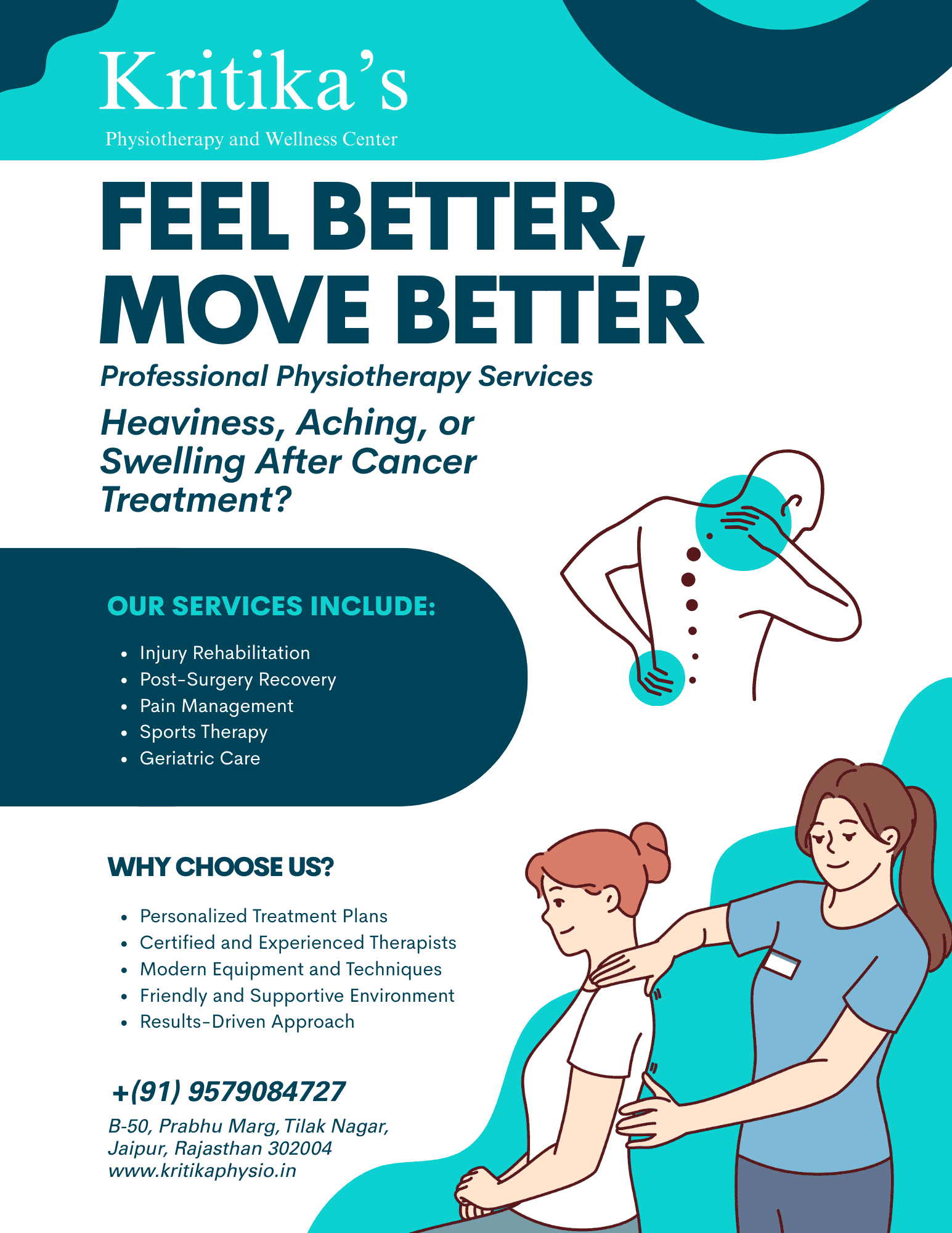
Do you feel heaviness, aching, or swelling in an arm or leg after cancer treatment? Don’t wait. Learn the early signs, causes, and safe treatment options to prevent complications.